


Important Tax Deductions for Business Owners
November 5, 2018
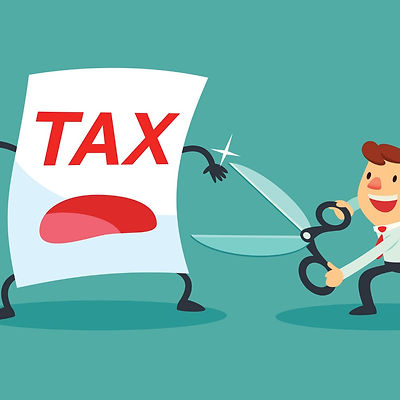
We know you work hard as a small business owner. We also know that owning a small business can be complicated and stressful, especially during tax season. One way to reduce that stress, and your income tax bill, for the upcoming tax season is to claim all of your tax deductions. What does a tax deduction do for you? A tax deduction lowers your taxable income, which thus lowers your tax liability!
Now, what tax deductions are you allowed to deduct as a small business owner? To determine the difference between a deduction and an expense, you need to determine if the expense is both ordinary and necessary to your business. In other words, an expense needs to be a common and accepted expense within your industry, or necessary and helpful for your business.
As a business owner, it is your duty to determine what expenses are personal and what are business-related. The rule of thumb is that you cannot deduct personal, living, or family expenses. However, if you use something for both, for instance, the internet at your home office, you can deduct a percentage of that cost for business purposes.
Common business tax deductions are travel, home office, meal, and vehicle. However, make sure you document everything because if you didn’t document your expenses properly, the IRS can deny your deductions. When it comes to tax deductions, there are numerous rules to follow, and documentation is at the top of the list. Below, is a more detailed breakdown of travel, home office, meal, and vehicle tax deductions.
Travel
Travel expenses include travel away from home for your business. There are two conditions you must first meet in order to deduct travel expenses. The first condition is your duties must require you to be away from your regular place of business longer than an ordinary work day. The second is you require substantial rest in order to meet the needs of your job while away on your business trip. If you meet one of the conditions above, there are numerous travel-related expenses you can deduct, during your business trip. Below is a quick overview of the top travel-related expenses you should keep records of.
Transportation: You can deduct the transportation between your home and business destination, along with business-related travel during your business trip. So anything transportation-related from flight tickets, Uber rides, taxi rides, public transportation, rental cars, to even toll booth and parking fees are eligible for a tax deduction
Shipments: Shipping items such as trade booth display materials is one example of a shipping cost that can be eligible for deduction. An example would be if you need to send your banners and marketing material to your hotel for a work-related event
Meals: You may deduct only 50% of the cost of business meals, which will be discussed in more detail below
Lodging: Any hotel expenses are eligible for deductions
Home Office
With a home office, business owners can claim a certain amount for tax purposes. There are three conditions to qualify you for a home office deduction; regularity, exclusivity, and precedence.
Regularity: You need to use your home office regularly and as the primary place of business.
Exclusivity: You need to meet the requirement that you have a designated workspace and it is exclusively for business activities.
Precedence: To qualify as the principal place of business. This means you must spend the majority of your time and conduct the most important business activities out of your home office space.
Home office deductions can be complex, so the IRS has a simplified method for calculating your home office expenses, which you can find here: https://www.irs.gov/businesses/small-businesses-self-employed/simplified-option-for-home-office-deduction
Meals
As mentioned above, certain meal expenses can be incurred while traveling away from home, but did you know they can also be deducted for entertainment of business customers, too? That’s right! If you are entertaining clients, prospects, or other business associates, you are entitled to a tax deduction. Furthermore, you are also able to deduct meal expenses when you feed your employees on-site.
A business owner can deduct 50% of qualifying food and drink expenses. To qualify for the tax deductions, make sure to record the amount of each expense, the time and place of the dining outing, the business relationship of each person you dined with, and of course, keep all receipts and records of the outing. An easy way to record this is simply to jot down all details on the back of the receipt immediately after the meal is over.
Please note that if you go to grab yourself a coffee and snack at your local coffee shop during your work day, that does not qualify. What will qualify is if you are traveling for business and grab yourself a coffee and snack along the way for sustenance.
Vehicles
As a business owner, you can deduct auto expenses when you visit clients, and customers, or attend off-site business meetings from your place of work, to the off-site location. You are allowed to deduct the portion of auto and transportation expenses for the miles you drove for business-related purposes.
Your personal miles need to be subtracted from your business miles. So for instance, if you drive ten miles for a service call, but then go five miles out of your way to pick up lunch. You have to subtract those five miles of personal auto use.
Remember that all mileage costs claimed to have to be related to business activity, and you must retain proper documentation of these costs for seven years from the year of filing. A good way to track this is through the MileIQ app. MileIQ is like a FitBit for automobiles that log and tracks your mileage. It will calculate your mileage while driving for business reasons, and that can then be used to report for reimbursement and potentially a tax deduction with the IRS.
So this is where it gets a bit more complicated. You can either deduct the 2018 standard mileage rate of 54.5 cents per mile, or you can deduct the actual cost incurred in driving the miles for business. If you choose the standard mileage method first, you can switch to actual expenses in a later year. If you instead choose to deduct your actual expenses in the year you start using your car for business, you can't switch to the standard mileage rate later.
If you use your vehicle solely for business purposes, then you can deduct its entire cost of operation. If you use it for both business and personal, you can only deduct the costs associated with business-related usage.
There is much more to this category, but this gives a broad overview. We are available to discuss the details in more depth via appointment!
Travel, meals, home office, and vehicle tax deductions are among some of the most common, but there are many other tax deductions to consider, including advertising, charitable contributions, educational expenses, licenses, regulatory fees, business interest, and bank fees, to name a few. Knowing all of the rules and regulations for each tax deduction can be daunting. If you want more information about business deductibles or even have general questions about your small business, please contact us! We would love to discuss how you keep your business strong and successful! To chat, simply fill out the contact form on the Contact Us page, give us a call at (906) 774-4051, or email us at solutions@f-ccpa.com. We're happy to help!